ArchbishopLefebvre.com
Links
  • Archbishop Lefebvre
    • Biography of Archbishop Lefebvre
    • Who is he?
    • In his own words
  • Sermons
    • Sunday Sermons
  • Letters
    • Archbishop Lefebvre >
      • To Friends and Benefactors
      • Other Letters
    • Bishop Williamson >
      • Friends and Benefactors
      • Eleison Comments >
        • Italiano
        • Espanol
      • To SSPX Priests
  • Blog
  • Books
    • E-Books
    • Free Catholic Books
    • Archbishop Lefebvre
    • Bibles
    • Blessed Sacrament
    • Children Books
    • Childrens Saints
    • DVDs
    • Hell
    • Purgatory
    • Our Lady
    • Sacred Heart
    • Missals
    • Missale Romanum
    • Summa Theologica
    • Saints
  • Catholic Faith
    • Catechisms
    • Catholic Art
    • Chant
    • Dogmas of the Catholic Church
    • Encyclicals
    • Sermons
    • History >
      • HughesVol1index
    • Liturgy
    • Sacraments
    • Prayers >
      • Blessings
    • Way of the Cross
  • SSPX Crisis
    • sspx Archbishop Lefebvre
    • monks nuns
    • SSPX Bishop Fellay
    • SSPX Bishop Tissier
    • ex-sspx Bishop Williamson
    • ex-sspx chazal
    • sspx couture
    • sspx fox
    • ex-sspx fuchs
    • ex-sspx girouard
    • ex-sspx hewko
    • sspx laisney
    • sspx ockerse
    • ex-sspx pfeiffer
    • sspx themann
    • Fr. Ringrose
  • Links
    • Other Sites
    • Donate
    • Facebook
    • Twitter
    • You Tube
  • TradCat Items
    • Beeswax Candles
    • Chapel Veils
    • Prayer Cards - Our Lady
    • Prayer Cards - Espanol
    • Protected Scapulars
    • Scapulars
    • Unbreakable Rosaries
  • Crisis in Church
    • Declaration of the 2006 Chapter (SSPX)
    • Fr Hewko to SSPX Superiors
    • History of the Archbishop and Rome
    • Vatican II more important than Nicea!
    • The Archbishop and Religious Liberty
    • The right to resist an abuse of power
    • How Are Catholics To Respond To The Present Crisis

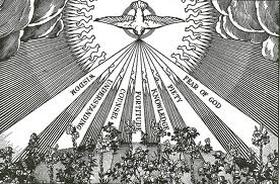
Gifts of Holy Ghost - 6th Understanding

5/17/2013

 
Picture
THE GIFT OF UNDERSTANDING

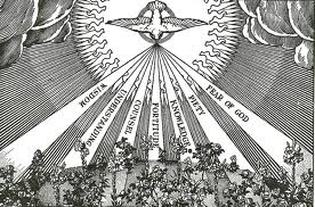
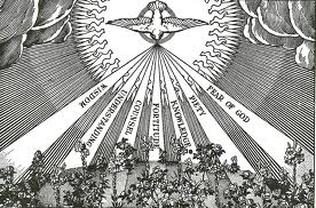
This sixth gift of the Holy Ghost raises the soul to a still higher state. The first five gifts all tend to action. The fear of God keeps man in his right place, for it humbles him; godliness opens his heart to holy affections; knowledge enables him to discern the path of salvation from that of perdition; fortitude arms him for the battle; counsel directs him in his thoughts and works:--thus gifted, he can act, and pursue his journey with the sure hope of coming at length to his heavenly home. But the Holy Ghost has other favours in store for him. He would give him a foretaste, here below, of the happiness that awaits him in the next life: it will give him confidence, it will encourage him, it will reward his efforts. Contemplation--this is the blissful region thrown open to him, and the Holy Ghost leads him thither by the gift of understanding.

There will be a feeling of surprise and hesitation arising in the minds of many at hearing this word, contemplation. They have been taught to look on contemplation as an element of the spiritual life which is rarely to be hoped for, and almost impossible for persons who are in the ordinary walks of life. We must begin, then, by telling them that such an idea is a great and dangerous error, and one that checks the progress of the soul. No: contemplation is a state to which, more or less, the soul of every Christian is called. It does not consist in those extraordinary effects which the Holy Ghost occasionally produces in some privileged souls, and by which lie would convince the world of the reality of the supernatural life. It is simply a relation of close intimacy existing between God and a soul that is faithful to Him in action. For such a soul, unless she herself put an obstacle, God reserves two favours: the first is the gift of understanding, which consists in a supernatural light granted to the mind of man.

This light does not remove the sacred obscurity of faith: but it enlightens the eye of the soul, strengthens her perception, and widens her view of divine things. It dispels clouds, which were occasioned by the previous weakness and ignorance of the soul. The exquisite beauty of the mysteries is now revealed to her, and the truths which hitherto seemed unconnected, now delight her. It is not the face-to-face vision which heaven gives, but it is something incomparably brighter than the feeble glimmer of former days, when all was mist and doubt. The eve of her spirit discovers analogies and reasons, which do something more than please--they bring conviction. The heart opens under the influence of these bright beams, for they feed faith, cherish hope, and give ardour to love. Everything seems new to her. Looking at the past, and comparing it with the present, she wonders within herself, how it is that truth, which is ever the same, has a charm and a power over her now which once it had not.

The reading or hearing of the Gospel produces an impression far deeper than formerly: she finds a. relish in the words of Jesus, which, in times past, she never experienced. She can understand so ranch better the object of the institution of the Sacraments. The holy liturgy with its magnificent ceremonies and sublime formulas, is to her an anticipation of heaven. She loves to read the lives of the saints; she can do so, and never feel a temptation to carp at their sentiments or conduct: she prefers their writings to all others, and she finds in these communications with the friends of God a special increase. of her spiritual good. No matter what may be the duties of her station in life, she has, in this glorious gift; a light which guides her in each of them. The virtues required from her, however varied they may be, are so regulated, that one is never done to the detriment of another; she knows the harmony that exists between them all, and she never breaks it. She is as far from scrupulosity as from tepidity; and when she commits a fault, she loses no time in repairing it. Sometimes the Holy Ghost layouts her with an interior speaking, which gives her additional lights.

The world and its maxims are mere vanities in her estimation; and when necessity obliges her to conform to what is not sinful in either, she does so without setting her heart upon it. Mere natural grandeur or beauty seems unworthy of notice to her whose eye has been opened, by the holy Spirit, to the divine and the eternal. To her, this outward world which the carnal-minded man loves to his own destruction, has but one fair side, viz: that the visible creation, with the impress of God’s beauty upon it, can be turned to its Maker’s glory. She gives Him thanks when she uses it; she elevates it to the supernatural order, by praising, as did the royal prophet, Him who shadowed the likeness of His own beauty on this world of created things, which men so often abuse to their perdition, but which were intended as so many steps to lead us to our God.

The gift of understanding teaches the Christian a just appreciation of the state of life in which God has placed Him. It shows him the wisdom and mercy of those designs of Providence which have, at times, disconcerted his own plans, and led him in a direction the very opposite to his wishes. He sees that had he been left to arrange things according to his own views, he would have gone astray; whereas now, God has put him in the right place, though the workings of His fatherly wisdom were, at first, hidden from him. Yes, he is so happy now ! he enjoys such peace of soul! he knows not how sufficiently to thank his God for having brought him where he is, without consulting his poor fancies ! If such a Christian as this be called upon to give counsel, if either duty or charity require him to guide others, he may safely be trusted; the gift of understanding teaches him to see the right thing for others as well as for himself. Not that he ever intrudes his counsel upon others, or makes himself adviser-general to all around him; but if his advice be asked, he gives it, and the advice is a reflex of the inward light that burns within him.

Such is the gift of understanding. It is the true life of the soul, and it is weaker or stronger according to the measure of her correspondence with the other gifts. Its safeguards are humility, restraint over the desires of the heart, and interior recollection. Dissipation of mind would dim. its brightness, or even who]ly put out the light. But where duty imposes occupations, not only busy and frequent, but even distracting, let the Christian discharge them with a pure intention, and his soul will not lose her recollection. Let him be single-hearted, let him be little in his own eyes, and that which God hides from the proud and reveals to the humble,’ will be manifested to him and abide with him.

It is evident from all this, that the gift of understanding is of immense importance to the salvation and sanctification of the soul. It behoves us, therefore, to beg it of the Holy Ghost with all the earnestness of supplication; for we must not forget that it is obtained rather by the longings of our love, than by any efforts of the intellect. True, it is the intellect that receives the light; but it is the heart, the will, inflamed with love, that wins the radiant gift. Hence that saying of Isaias: ‘Unless ye believe, ye shall not understand!’ Let us, then, address ourselves to the Holy Ghost in these words of the psalmist: ‘Open Thou our eyes, and we will consider the wondrous things of Thy law! Give us understanding and we shall live!’ Let us beseech Him in these words of the apostle, wherein he is praying for his Ephesians: ‘Give us the Spirit of wisdom and revelation, whereby we may have the knowledge of our God! Enlighten the eyes of our heart, that we may know what is the hope of our calling, and what the riches of the glorious inheritance prepared for the saints.
Gifts of Holy Ghost - 5th Fortitude

5/17/2013

 
Picture
THE GIFT OF FORTITUDE

The gift of knowledge has taught us what we must do and what we must avoid, in order that we may be such as Jesus, our divine Master, wishes us to be. We now need another gift of the Holy Ghost, from which to draw the energy necessary for persevering in the way lie has pointed out to us. Difficulties we are sure to have; and our need of support is proved enough by the miserable failures we are daily witnessing. This support the Holy Ghost grants me by the gift of fortitude, which, if we but faithfully use it, will enable us to master every difficulty, yea will make it easy to us to overcome the obstacle: which would impede our onward march.

When the difficulties and trials of life come upon him, man is tempted, sometimes to cowardice and discouragement, sometimes to an impetuosity which arises either from his natural temperament or from pride. These are poor aids to the soul in her spiritual combat. The Holy Ghost, therefore, brings her a new element of strength: it is supernatural fortitude, which is so peculiarly His gift, that when our Saviour instituted the seven sacraments, He would have one of them be for the special object of giving us the Holy Ghost as a principle of energy. It is evident that, having to fight during our whole lives against the devil, the world, and ourselves, we need some better power of resistance than either pusillanimity or daring. We need some gift, which will control both our fear, and the confidence we are at times inclined to have in ourselves. Thus gifted by the Holy Ghost, man is sure of victory; for grace will supply the deficiencies, and correct the impetuosities of nature.

There are two necessities, which are ever making themselves felt in the Christian life: the power of resistance, and the power of endurance. What could we do against the temptations of Satan, if the fortitude of the holy Spirit did not clothe us with heavenly amour and nerve us for the battle? And is not the world, too, a terrible enemy ? Have we not reason to dread it when we see how it is every day making victims by the tyranny of its claims and its maxims. What, then, must be the assistance of the Holy Ghost, which is to make us invulnerable to the deadly shafts that are dealing destruction around us

The passions of the human heart are another obstacle to our salvation and sanctification; they are the more to be feared, because they are within us. It is requisite that the Holy Ghost change our heart, and lead it to deny itself as often as the light of grace points out to us a way other than that which self-love would have us follow. What supernatural fortitude we need in order to hate our life as often as our Lord bids us make a sacrifice, or when we have to choose which of the two masters we will serve! The Holy Ghost is daily working this marvel by means of the gift of fortitude: so that, we have but to correspond to the gift, and not stifle it either by cowardice or indiscretion, and we are strong enough to resist even our domestic enemies. This blessed gift of fortitude teaches us to govern our passions and treat them as blind guides; it also teaches us never to follow their instincts, save when they are in harmony with the law of God.

There are times, when the Holy Ghost requires from a Christian something beyond interior resistance to the enemies of his soul: he must make an outward protestation against error and evil, as often as duty demands it. On such occasions, he must bear to become unpopular, and console himself with the words of the apostle: 'If I yet pleased men, I should not be the servant of Christ.' But the Holy Ghost will be on his side; and finding him resolute in using His gift of fortitude, not only will He give him a final triumph, but lie generally blesses that soul with a sweet and courageous peace, which is the result and recompense of a duty fulfilled.

Thus does the Holy Ghost apply the gift of fortitude, when there is question of a Christian's making resistance. But, as we have already said, He imparts also the energy necessary for bearing up against the trials, which all must go through who would save their souls. There are certain fears, which damp our courage, and expose us to defeat. The gift of fortitude dispels them, and braces us with such a peaceful confidence, that we ourselves are surprised at the change. Look at the martyrs: not merely at such an one as Saint Mauritius, the leader of the Theban legion, who was accustomed to face danger on the battle-field; but at Felisitas, a mother of seven children; at Perpetua, a high-born lady with everything this world could give her; at Agnes, a girl of thirteen; and at thousands of others like them: and say, if the gift of fortitude is not a prompter to heroism. Where is the fear of death--that death the very thought of which is sometimes more than we can bear? And what are we to say of all those lives spent in self-abnegation and privation with a view to make Jesus their only treasure and to be the more closely united with Him? What are we to say of those hundreds and thousands of our fellow-creatures who shun the sight of a distracted and vain world, and make sacrifice their rule? Whose peacefulness is proof against every trial, and whose acceptance of the cross is as untiring as the cross itself is in its visit ? What trophies are these of the Spirit of fortitude! and how magnificent is the devotedness He creates for every possible duty! Oh! truly, man of himself is of little worth; but, how grand when under the influence of the Holy Ghost !

It is the same divine Spirit who also gives the Christian courage to withstand the vile temptation of human respect, by raising him above those worldly considerations which would make him disloyal to duty. It is He that leads man to prefer, to every honour this world could bestow, the happiness of never violating the law of his God. It is the Spirit of fortitude that makes him look upon the reverses of fortune as so many merciful designs of Providence; that consoles him, when death bereaves him of those who are dear to him; that cheers him under bodily sufferings, which would be so hard to bear but for his taking them as visits from his heavenly Father.

In a word, it is He, as we learn from the lives of the saints, that turns the very repugnances of nature into matter for heroic acts, wherein man seems to go beyond the limits of his frail mortality and emulate the impassible and glorified spirits of heaven.

O divine Spirit of fortitude! take full possession of our souls, and keep us from the effeminacies of the age we live in. Never was there such lack of energy as now, never was the worldly spirit more rife, never was sensuality more unbridled, never were pride and independence more the fashion of the world. So forgotten and unheeded are the maxims of the Gospel, that when we witness the fortitude of self-restraint and abnegation, we are as surprised as though we beheld a prodigy. O holy Paraclete, preserve us from this anti-Christian spirit, which is so easily imbibed ! Suffer us to present to Thee, in the form of prayer, the advice given by Saint Paul to the Christians of Ephesus: 'Give us, we beseech Thee, the armour of God, that we may be able to resist in the evil day, and to stand in all things perfect. Gird our reins with truth; arm us with the breast-plate of justice; let our feet be shod with the love and practice of the Gospel of peace; give us the shield of faith, wherewith we may be able to extinguish all the fiery darts of the most wicked one; cover us with the helmet of the hope of salvation; put into our hand the spiritual sword, which is the word of God,' and by which we, as did our Jesus in the desert, may defeat all our enemies! O Spirit of fortitude! hear, we beseech Thee, and grant our prayer!

Gift of Holy Ghost - 4th Knowledge

5/17/2013

 
Picture
  THE GIFT OF KNOWLEDGE

Detached from evil by the fear of the Lord, and ennobled with holy love by the gift of piety, the soul feels the want of knowing how she is to avoid what she must fear, and how to find what she must love. The Holy Ghost comes to her assistance, and brings her what she needs, by infusing into her the gift of knowledge. By means of this precious gift, truth is made evident to her; she knows what God asks of her and what He condemns, she knows what to seek and what to shun. Without this holy knowledge, we are in danger of going astray, because of the frequent darkness which, more or less, clouds our understanding. This darkness arises, in the first place from our own nature, which bears upon itself the but too visible proofs of the fall. It is added to by the false maxims and judgements of the world, which so often warp even those whose upright minds seemed to make them safe. And lastly, the action of Satan, who is the prince of darkness, has this for one of its chief aims: to obscure our mind, or to mislead it by false lights.

The light of our soul is faith, which was infused into us at our baptism. By the gift of knowledge, the Holy Ghost empowers our faith to elicit rays of light strong enough to dispel all darkness. Doubts are then cleared up, error is exposed and put to flight, truth beams upon us in all its beauty. Everything is viewed in its true light, the light of faith. We see how false are the principles which sway the world, which ruin so many souls, and of which we ourselves were once, perhaps, victims.

The gift of knowledge reveals to us the end which God had in creation, and out of which creatures can never find either happiness or rest. It teaches us what use we are to make of creatures, for they were not given us to be a hindrance, but a help whereby to reach our God. The secret of life thus possessed, we walk on in safety, we halt not, and we are resolved to shun every path which would not lead us to our end.

The apostle had this gift in view, when, speaking to the converts of Ephesus, he said: 'Ye were heretofore darkness, but now light in the Lord: walk then as children of the light.' Hence comes that unhesitatingness, that 'confidence of the Christian life'. There may be a want of experience now and then; so much so indeed, that the little world around talks feelingly about the indiscretions and scandals which are almost sure to arise; but they forget that there is the gift of knowledge, of which the sacred Scripture thus speaks: ' She conducted the just through the right ways, and gave him the knowledge of holy things,' or, as some render it, 'the science of the saints." We have daily proofs of this truth: a Christian, by means of supernatural light, is found to escape every danger; he has no experience of his own, but he has the experience of God.

We give thee thanks, O holy Paraclete! for this Thy gift of light, which Thou so lovingly maintaining within us! Oh! never permit us to seek any other. It alone is sufficient; without it, there is nought but darkness. Preserve us from those sad inconsistencies, of which so many are guilty, who follow Thy guidance today, and the maxims of the world tomorrow; wretched double-dealing, which displeases Thee, and does not please the world ! Make us love that knowledge, which Thou gavest us in order for our salvation. The enemy of our souls is jealous of our having such a gift, and is ever studying to make us exchange it for his lying principles. O divine Spirit, suffer not his treachery to triumph. Be Thou ever within us, aiding us to distinguish truth from falsity, and right from wrong. May our eye be single and simple, as our Jesus bids it be; that so our body, that is, our actions, desires, and thoughts, may be lightsome; and preserve us from that evil eye, which makes the whole body to be darkness.

Gifts of Holy Ghost - 2nd Wisdom

5/16/2013

 
Picture
    The second favour destined by the Holy Ghost for the soul that is faithful to Him in action, is the gift of wisdom, which is superior to that of understanding. The two are, ‘ however, connected together, inasmuch as the object shown by the gift of understanding, is held and relished by the gift of wisdom. When the psalmist invites us to draw nigh to God, he bids us relish our sovereign good: ‘ Taste ‘, says he, ‘ and see that the Lord is sweet!’ Holy Church prays for us, on the day of Pentecost, that we may relish what is right and just (recta sapere), because the union of the soul with God is rather an experience or tasting, than a sight, for such sight would be incompatible with our present state. The light given by the gift of understanding is not intuitive; it gladdens the soul, and gives her an instinctive tendency to the truth; but its own firm perfection depends upon its union with wisdom, which is, as it were, its end.

Understanding, therefore, is light; wisdom is union. Now, union with the sovereign good is attained by the will, that is, by love, which is in the will. Thus, in the angelic hierarchy, the Cherubim, with their sublime intellect, are below the Seraphim, who are inflamed with love. It is quite true that the Cherubim have ardent love and the Seraphim profound intelligence; but they differ from each other by their predominating quality; and that choir is the higher of the two which approaches the nearer to the Divinity by its love and relish of the sovereign good.

The seventh gift is called by the beautiful name of wisdom, which is taken from its uniting the soul, by love, to the eternal Wisdom. This eternal Wisdom, who mercifully puts Himself within our reach even in this vale of tears, is the divine Word, whom the apostle calls the brightness of the Father’s glory, and the figure of His substance. It is He who sent us the Holy Ghost, that He might sanctify us and bad us to Himself; so that the sublimest of the workings of this Holy Spirit is His procuring our union with Him, who, being God, became Flesh, and for our sake made Himself obedient unto death, even to the death of the cross. By the mysteries wrought in His Humanity, Jesus enabled us to enter within the veil of His Divinity; by faith, enlightened by supernatural understanding, we see the glory of the Only-Begotten of the Father; and just as He made Himself a partaker of our lowly human nature, so does He give Himself the uncreated Wisdom, to be loved and relished by that created wisdom, the noblest of the gifts which the Holy Ghost forms within us.

Happy, then, they who possess this precious wisdom, which makes the soul relish God and the things that are of God! ‘The sensual man,’ says the apostle, ‘perceiveth not the things that are of the Spirit of God'; and in order that he may enjoy this gift, he must become spiritual, and docile to the teachings of the holy Spirit; and then there will happen to him, what has happened to thousands of others, namely, that after being a slave to a carnal Hie, he will recover his Christian freedom and dignity. The man who is less depraved than the former, but still imbued with the spirit of the world, is also incapable of receiving or even comprehending the gifts of understanding and wisdom. He is ever ridiculing those who, he cannot help knowing, possess these gifts; he never leaves them in peace, but is ever carping at their conduct, setting himself in opposition to them, and, at times, seeking to satiate his jealousy by bitter persecution. Jesus assures us that the world cannot receive the Spirit of truth, because it seeth Him not, nor knoweth Him. They, therefore, who would possess the supreme good, must first divorce themselves from the spirit of the world, which is the personal enemy of the Spirit of God. If they break asunder the chain that now fetters them, they may hope to be gifted with wisdom.

The special result of this gift is great vigour in the soul, and energy in all her powers. Her’ whole life is, so to speak, seasoned with it; the effect may be likened to that produced in the body by wholesome diet. There is no disagreement between such a soul and her God; and hence, her union with Him is almost inevitable. ‘Where the Spirit of the Lord is’, says the apostle, ‘there is liberty.’ Everything is easy to the soul that is under the influence of the Spirit of wisdom. Things that are hard to nature are sweet to such a soul; and suffering does not appal her, as once it did. To say that God is near to her is saying too little: she is united with Him. And yet, she must keep herself in an attitude of profound humility, for pride may reach her even in that exalted state, and oh, how terrible would be her fall.

Let us with all the earnestness of our hearts, beseech the Holy Ghost to give us this wisdom, which will lead us to our Jesus, the infinite Wisdom. One who was wise under the old Law aspired to this when he wrote these words, of which we Christians alone can appreciate the full meaning: ‘I wished and understanding was given to me; and I called upon God and the Spirit of wisdom came upon me.’ So that we are to ask for this gift, and with great fervour. In the new Covenant, we have the apostle Saint James thus urging us to pray for it: ‘If any of you want wisdom, let him ask of God who giveth to all men abundantly, and upbraideth not; and it shall be given him; but let him ask in faith, nothing wavering.’

O Holy Ghost, we presume to follow this injunction of the apostle, and say to Thee: O Thou who proceedest from Power and Wisdom, give us wisdom! He that is Wisdom has sent Thee unto us, that Thou mayst unite us to Him. Take us from ourselves, and unite us to Him who united Himself to our weak nature. O sacred source of unity, be Thou the link uniting us for ever to Jesus; then will the Father adopt us as His heirs, and joint-heirs with Christ!

Gifts of Holy Ghost - 1st Fear

5/16/2013

 
Picture
    Pride is the obstacle to man's virtue and well-being. It is pride that leads us to resist God, to make self our last end, in a word, to work our own ruin. Humility alone can save us from this terrible danger. Who will give us humility? The Holy Ghost; and this by infusing into us the gift of the fear of God.

This holy sentiment is based on the following truths, which are taught us by faith: the sovereign majesty of God, in comparison with whom we are mere nothingness; the infinite sanctity of that God, in whose presence we are but unworthiness and sin; the severe and just judgement we are to go through after death; the danger of falling into sin, which may be our misfortune at any time, if we do not correspond to grace, for although grace be never wanting, yet we have it in our power to resist it.

Man, as the apostle tells us, must work out his salvation with fear and trembling ; but this fear, which is a gift of the Holy Ghost, is not the base sentiment which goes no further than the dread of eternal punishments. It keeps alive within us an abiding compunction of heart, even though we hope that our sins have long ago been forgiven. It prevents our forgetting that we are sinners, that we are wholly dependent upon God's mercy, and that we are not as yet safe, except in hope.

This fear of God, therefore, is not a servile fear; on the contrary, it is the source of the noblest sentiments. Inasmuch as it is a filial dread of offending God by sin, it may go hand-in-hand with love. Arising as it does from a reverence for God's infinite majesty and holiness, if, puts the creature in his right place, and, as St. Paul says, it contributes to the perfecting of sanctification. Hence this great apostle, who had been rapt up to the third heaven, assures us that he was severe in his treatment of himself, lest he should become a cast-away.

The spirit of independence and of false liberty, which is nowadays so rife amongst us, is a great enemy to the fear of God; and one of the miseries of our age is, that there is little fear of God. Familiarity with God but too frequently usurps the place of that essential basis of the Christian life. The result is, that there is no progress in virtue, such people are a prey to illusion; and the sacraments, which previously worked so powerfully in their souls, are now well-nigh unproductive. The reason is that the gift of fear has been superseded by a conceited self-complacency. Humility has no further sway; secret and habitual pride has paralysed the soul; and seeing that these people scout the very idea of their ever trembling before the great God of heaven, we may well ask them if they know who God is.

Therefore we beseech thee, O Holy Ghost! keep up within us the fear of God, which Thou didst infuse into our hearts at our Baptism. This saving fear will ensure our perseverance in virtue, or it will oppose the growth of pride. Let it pierce our soul through and through, and ever abide with us as our safeguard. Let it bring down our haughtiness, and rouse us from tepidity, by ceaselessly reminding us of the greatness and holiness of Him who is our Creator and our Judge.

This holy fear does not stifle the sentiment of love; on the contrary, it removes what would be a hindrance to its growth. The heavenly Powers see and ardently love their God, their infinite and eternal good; and yet, they tremble before His dread Majesty: Tremunt Potestates. And shall we, covered as we are with the wounds of our sins, disfigured by countless imperfections, exposed on every side to snares, obliged to fight with so many enemies--shall we flatter ourselves that we can do without this strong and filial fear ? and that we need nothing to stimulate us, when we are in those frequent trials--a want of fervour in our will, or of light in our mind?

O Holy Ghost! Watch over us! Preserve within us Thy precious gift! Teach us how to combine peace and joy of heart with the fear of our Lord and God, according to those words of the psalmist: Serve ye the Lord with fear, and rejoice unto Him with trembling!


Pentecost History And Customs

5/15/2013

 
Picture
Pentecost (Whitsunday), a feast of the universal Church which commemorates the Descent of the Holy Ghost upon the Apostles, fifty days after the Resurrection of Christ, on the ancient Jewish festival called the "feast of weeks" or Pentecost (Exodus 34:22; Deuteronomy 16:10). Whitsunday is so called from the white garments which were worn by those who were baptised during the vigil; Pentecost ("Pfingsten" in German), is the Greek for "the fiftieth" (day after Easter).Whitsunday, as a Christian feast, dates back to the first century, although there is no evidence that it was observed, as there is in the case of Easter; the passage in 1 Corinthians 16:8 probably refers to the Jewish feast. This is not surprising, for the feast, originally of only one day's duration, fell on a Sunday; besides it was so closely bound up with Easter that it appears to be not much more than the termination of Paschal tide.

That Whitsunday belongs to the Apostolic times is stated in the seventh of the (interpolated) fragments attributed to St. Irenæus. In Tertullian (On Baptism 19) the festival appears as already well established. The Gallic pilgrim gives a detailed account of the solemn manner in which it was observed at Jerusalem ("Peregrin. Silviæ", ed. Geyer, iv). The Apostolic Constitutions (Book V, Part 20) say that Pentecost lasts one week, but in the West it was not kept with an octave until at quite a late date. It appears from Berno of Reichenau (d. 1048) that it was a debatable point in his time whether Whitsunday ought to have an octave. At present it is of equal rank with Easter Sunday. During the vigil formerly the catechumens who remained from Easter were baptized, consequently the ceremonies on Saturday are similar to those on Holy Saturday.

The office of Pentecost has only one Nocturn during the entire week. At Terce the "Veni Creator" is sung instead of the usual hymn, because at the third hour the Holy Ghost descended. The Mass has a Sequence, "Veni Sancte Spiritus" the authorship of which by some is ascribed to King Robert of France. The colour of the vestments is red, symbolic of the love of the Holy Ghost or of the tongues of fire. Formerly the law courts did not sit during the entire week, and servile work was forbidden. A Council of Constance (1094) limited this prohibition to the first three days of the week. The Sabbath rest of Tuesday was abolished in 1771, and in many missionary territories also that of Monday; the latter was abrogated for the entire Church by Pius X in 1911. Still, as at Easter, the liturgical rank of Monday and Tuesday of Pentecost week is a Double of the First Class.In Italy it was customary to scatter rose leaves from the ceiling of the churches to recall the miracle of the fiery tongues; hence in Sicily and elsewhere in Italy Whitsunday is called Pascha rosatum.

The Italian name Pascha rossa comes from the red colours of the vestments used on Whitsunday. In France it was customary to blow trumpets during Divine service, to recall the sound of the mighty wind which accompanied the Descent of the Holy Ghost. In England the gentry amused themselves with horse races. The Whitsun Ales or merrymakings are almost wholly obsolete in England. At these ales the Whitsun plays were performed. At Vespers of Pentecost in the Oriental Churches the extraordinary service of genuflexion, accompanied by long poetical prayers and psalms, takes place. (Cf. Maltzew, "Fasten-und Blumen Triodion", p. 898 where the entire Greco-Russian service is given; cf. also Baumstark, "Jacobit. Fest brevier", p. 255.) On Pentecost the Russians carry flowers and green branches in their hands.

Forward>>


    archbishop lefebvre
    Click to see more

    Enter your email address for daily posts:

    Delivered by FeedBurner

    Archives

    December 2014
    October 2014
    September 2014
    August 2014
    July 2014
    June 2014
    May 2014
    April 2014
    March 2014
    February 2014
    January 2014
    December 2013
    November 2013
    October 2013
    September 2013
    August 2013
    July 2013
    June 2013
    May 2013

    Categories

    All
    Apologetics
    Archbishop Lefebvre
    Bishop Williamson
    Blessed Sacrament
    Catechism
    Catholic History
    Chalk Talks
    Chastisement
    Devotions
    Easter
    Eleison Comments
    Eleison Comments
    Eleison Comments Italian
    Encyclicals
    Espanol Eleison Comments
    Families
    Fatima
    Feast Days
    For Fathers (Dads)
    For Moms
    Fortitude
    Holy Ghost
    Holy Name
    Holy Souls
    Holy Week
    Home Schooling
    Lent
    Liberalism
    Litanies
    Liturgy
    Marriage
    Martyrology
    Martyrs
    Mass
    Meditations Of Abl
    Modesty
    News
    New World Order
    Obedience
    Our Lady
    Our Lady Of Quito
    Our Lord
    Pentecost
    Pioneer Priests
    Prayers
    Sacramentals
    Sacraments
    Sacred Heart
    Saint Of The Day
    Saints For April
    Saints For August
    Saints For December
    Saints For February
    Saints For January
    Saints For July
    Saints For June
    Saints For March
    Saints For May
    Saints For November
    Saints For October
    Saints For September
    Scandal
    Scapular
    Sermons
    Sspx
    St Benedict
    St Joseph
    St Michael
    St Michael
    Sundays Of The Year
    Temptations
    The Church
    The Last Things
    The Mass
    The Pope
    The Rosary
    The Saints
    The Virtues
    Tradcat Comments
    Truth Society

    Picture
    Click to see inside the store
    Picture
    k d
    Counter Site
    While Archbishop Lefebvre Blog is provided free of charge, there are administrative and technical costs associated with making it available to subscribers worldwide and with operating this site. Contributions to offset these costs are appreciated, and may be made via the button below

    Archbishop Lefebvre

    Promote Your Page Too
Powered by Create your own unique website with customizable templates.